The Ugandan business landscape is currently navigating a quiet but profound transformation. Something fundamental has shifted in how brands approach their customers, marking a departure from traditional methods toward a data-driven, AI-first future. Where five years ago marketing conversations were dominated by radio slots and billboard placements, today’s boardrooms are analysing TikTok engagement metrics, mobile money integration, and complex customer attribution models. Uganda is at a marketing inflection point, rewriting the rules of connection in an increasingly digital world.
The Numbers Behind The Surge
The scale of this shift is best understood through the lens of investment. In the first half of 2025, above-the-line advertising spend in Uganda reached UGX 309 billion, a staggering 30% increase from the same period in 2024. Total media and advertising investment for the full year of 2024 stood at UGX 516 billion, representing a 23% growth from 2023. These figures tell a story of an industry that refuses to slow down, even as global and local economic headwinds threaten to tighten marketing budgets.
However, beneath these encouraging top-line numbers lies a more nuanced and complex reality. While the total spend is rising, the way these resources are allocated reveals a market still struggling to find its footing in the digital age. Currently, half of Ugandan businesses allocate less than 5% of their annual revenue to marketing.
This conservative approach is a byproduct of two factors: strict budget constraints and a lingering uncertainty among executives about marketing’s direct contribution to business growth. According to the Evolve Africa survey, many businesses remain unable to link their marketing spend to tangible outcomes, creating a "measurement gap" that represents both a significant hurdle and a massive opportunity for the industry.
The Digital vs. Traditional Gap
Perhaps the most striking finding in the current landscape is the disconnect between business planning and audience behaviour. This "digital divide" is evident when looking at channel-specific allocations. Despite the visible shift in how Ugandans consume content, 55.3% of businesses still allocate less than 5% of their marketing budget to digital channels. Only a small fraction, roughly 20.6%, invest more than 20% of their budget into digital platforms.
This slow adoption by businesses stands in stark contrast to the explosive growth in data consumption. Data from the Uganda Communications Commission (UCC) shows that Ugandans consume 22.4 million gigabytes of data daily on TikTok alone, accounting for 56% of all social media data consumption in the country. This level of usage proves that digital platforms are no longer just for entertainment; they are deeply embedded in daily routines, serving as primary tools for communication and product discovery. The shift from text-based updates to short-form video demands an entirely different creative approach and production capability that many traditional marketers are not yet equipped to provide.
Where Ugandans Spend Their Time
As of late 2025, Uganda’s digital footprint has expanded significantly. The country now boasts 56.7 million active mobile subscriptions and 17 million mobile internet users. In the third quarter of 2025 alone, these users consumed a massive 268.8 million gigabytes of data. WhatsApp remains the dominant communication tool with 10 million users, followed closely by TikTok with 9.3 million local users.
These platforms have become the market squares where recommendations are exchanged, and purchase decisions are validated through peer conversations. For a brand to remain visible in 2026, it must exist within these everyday consumer interactions. However, a significant gender gap persists in these spaces. Men represent 62% of social media users, compared to only 38% female users. This imbalance even extends to platforms like Instagram, which typically trend female globally. This disparity signals a massive untapped opportunity for brands to develop strategies that deliberately reach and engage women in digital spaces.
The Reality Of The Feature Phones And The Rural Divide
While the digital growth is impressive, marketers cannot afford to ignore smartphone adoption. With 31.5 million feature phones still in use, any strategy that focuses exclusively on high-bandwidth apps will miss a substantial portion of the population. In rural areas, where 72.3% of Ugandans live, voice calls, SMS, and USSD technologies remain the most reliable tools for engagement.
Internet penetration is roughly 21.88%, so national campaigns require a thoughtful hybrid mix. Brands must cater to the highly connected urbanite using 5G in Kampala while simultaneously reaching the rural farmer through radio and SMS. A one-size-fits-all digital strategy will fail in a market where connectivity levels vary so significantly by region.
The Persistence Of Traditional Media
Despite the digital buzz, traditional media still commands the lion’s share of advertising revenue. In the first half of 2025, television captured 51% of above-the-line spend, while radio took 47%. Print media has seen a sharp decline, claiming just 2% of the market. Television and radio remain the heavyweights for building national awareness, particularly for older consumers and those in areas with limited internet infrastructure.
While large sectors like Telecoms, FMCG, and Financial Services dominate traditional airwaves, Small and Medium Enterprises (SMEs) are proving that digital channels can deliver better ROI on smaller budgets. Through WhatsApp commerce, micro-influencer partnerships, and organic TikTok content, SMEs are generating leads at a fraction of the cost of a traditional billboard. For these smaller players, a single viral video often carries more weight than a modest radio campaign.
Barriers To Growth: Skills And Strategy
The biggest obstacle to Uganda’s marketing evolution isn't just a lack of budget; it is a skills gap. The lack of expertise in digital analytics, attribution modelling, and marketing automation. Without the ability to track the customer journey from the first click to the final mobile money transaction, marketers struggle to justify increased digital investment to their leadership teams.
External factors further complicate execution. The scarcity of analytical talent means that when qualified professionals are trained, they are often poached by international firms or better-resourced organisations.
There is also a growing concern regarding transparency and fraud in digital spaces, with brands requiring constant vigilance against ad fraud and inauthentic influencer metrics.
The Path Forward: A Hybrid Future
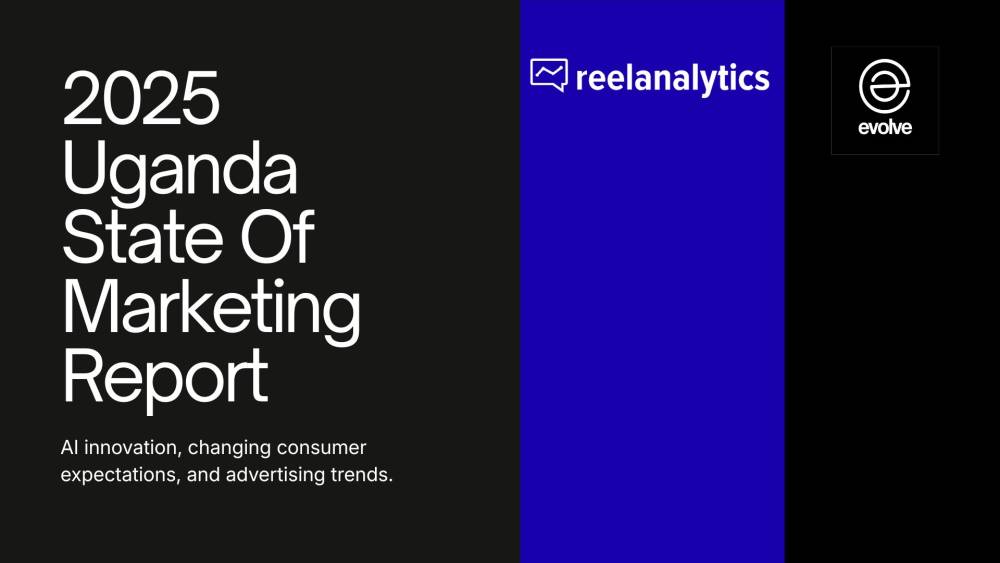
The State of Marketing Report Uganda 2025 projects that digital marketing spend will grow to reach 15–30% of total budgets within the next three to five years. This growth will be fueled by the expansion of 4G and 5G networks and the falling price of smartphones.
The "influencer economy" will also play a pivotal role. More than half of marketers now identify TikTok as brand-relevant. The future belongs to micro-influencers and creators who may not have millions of followers but possess deep, authentic trust within specific local communities.
For the Ugandan practitioner, the winning strategy is a hybrid model. It involves building sophisticated digital campaigns for urban audiences while maintaining a strong presence on radio and SMS for the rest of the country. Central to this is mobile money integration. Regardless of whether a customer is in a village or a city, mobile money is the unifying infrastructure. Brands that embed payment options directly into their marketing funnels will see much higher conversion rates.
Uganda’s marketing industry is at an inflection point. The brands that will thrive in this AI-first, data-driven landscape are those that balance immediate reach with long-term capability building. They must localise their content using Ugandan humour, languages, and cultural references to remain authentic while adopting professional global standards for measurement and optimisation. By bridging the gap between traditional reliability and digital innovation, businesses can turn Uganda's unique market challenges into their greatest competitive advantages.
Learn how Ugandan SMEs are using WhatsApp and TikTok to outpace big budgets. Download the inaugural State of Marketing Report.